

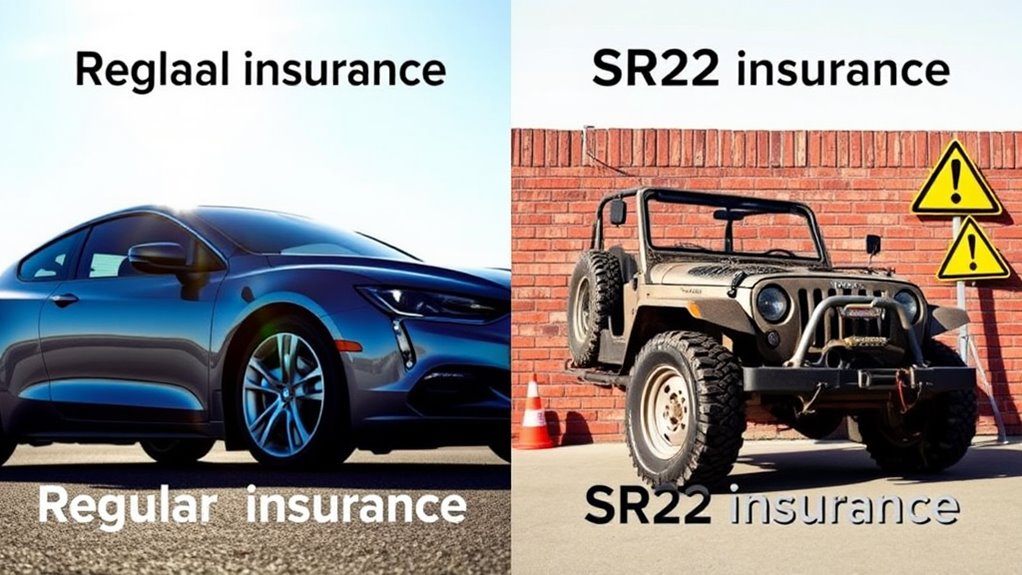
When it comes to understanding insurance, you might wonder about the distinction between SR-22 and regular insurance. SR-22 isn't actually a type of insurance; it's a certification that your insurer files to prove you meet state-mandated liability coverage, often required for high-risk drivers. Regular insurance, however, caters to those without serious infractions. Each has its implications on cost and coverage, and knowing these differences can impact your choices considerably. What does this mean for your specific situation?
When it comes to car insurance, understanding the difference between SR-22 and regular insurance is important, especially if you've had serious driving infractions. An SR-22 isn't a type of insurance; rather, it's a certification your insurance company files with the state to prove you meet the minimum insurance requirements. This form primarily targets high-risk drivers who've encountered issues like DUIs or major traffic violations. If you find yourself in this situation, you'll need to maintain an SR-22 for a set period, typically around three years. The SR-22 is particularly relevant in California's insurance regulations, which mandate specific requirements for high-risk drivers.
The purpose of the SR-22 is to guarantee that you maintain financial responsibility for any potential damages you might cause while driving. While regular insurance policies generally cater to standard risk drivers, SR-22 policies are associated with higher risk factors, which inevitably lead to increased premiums. This means that if you're required to file an SR-22, you can expect your insurance rates to rise compared to what you might've paid before.
The SR-22 ensures financial responsibility for high-risk drivers, often resulting in higher insurance premiums.
In terms of coverage, an SR-22 policy will include the mandatory liability coverage to meet state requirements. However, you can opt for additional coverage like all-encompassing and collision, especially if you have a financed vehicle, as banks often require such policies. While you can choose higher coverage limits for extra protection, it's important to recognize that the flexibility of SR-22 policies allows you to add the SR-22 certification to your existing insurance or start a new policy altogether.
The costs associated with an SR-22 filing are generally low, typically ranging from $15 to $25. However, you'll need to keep in mind that while the initial filing cost is affordable, the ongoing premiums can notably increase due to your high-risk status. In contrast, regular insurance premiums are usually more manageable for drivers without serious infractions. Additionally, the SR-22 certificate is required for high-risk drivers who need to reinstate their driving privileges after major violations.
If you let your policy lapse, your insurance company is obligated to notify the DMV, which can lead to penalties such as license suspension. Eligibility for an SR-22 generally includes drivers with serious infractions like DUIs or revoked licenses. The requirement typically lasts several years, during which you must maintain continuous insurance coverage. Once you've fulfilled these requirements, you can revert to regular insurance policies.
It's essential to maintain uninterrupted coverage during this period, as it helps improve your future insurance ratings. If you're considering switching between policies, you can add the SR-22 to your existing coverage. However, this could lead to a rise in premiums. Some drivers choose to take out separate policies to avoid higher costs associated with their current insurer.
Understanding these distinctions is important for making informed decisions about your insurance needs. By grasping the differences between SR-22 and regular insurance, you can better navigate the complexities of car insurance and confirm you're adequately covered.
Conclusion
In conclusion, while SR-22 serves as a safety net for high-risk drivers, regular insurance is like a smooth road for those with clean records. Understanding these differences helps you navigate your insurance options more effectively. If you find yourself needing an SR-22, be prepared for higher premiums and stricter requirements. Conversely, if you're driving without major violations, regular insurance provides more flexibility and affordability. Choose wisely, and keep your driving record in good shape!